Showing posts with label Gear. Show all posts

Wednesday, April 3, 2013

What's In The Bag??

I read a blog post today by one of the bloggers that I follow, and it was about what he carries in his camera bag. It was a long list, and it definitely got me thinking about things that I'd like to have, but also about what I have in my own camera bag, so I thought I would go ahead and give a little breakdown to show what I carry around with me. All photographs, by the way (with the exception of my business card), courtesy of Google searches for the products being described and none of which were taken by me I am sorry to say.


First of all, when talking about what I have in my camera bag, I suppose I should start off by talking about the bag itself. Until recently I have been carrying my gear in the stock standard Canon bag that came with my lens, which managed to fit my camera, the flash that I have been borrowing and three lenses (one on camera) at a squeeze. On my recent trip to Cape Town, my Dad offered to let me take his older Lowepro EX 180, and it has proven to be the best bag for me (for the moment anyway). It comfortably fits my camera, four lenses, the flash and all of the extra bits and bobs like batteries, charger, cable release, business cards and more. I have yet to find myself short on space, and it is barely larger than the bag I was using before and infinitely more comfortable. I am sure that in the years to come, I will be looking at getting something bigger, but for where I am now it is a perfect fit for me.


Next I'd better talk about the camera itself. I only have one DSLR that I carry with me everywhere, and that is my Canon Kiss X4, also known as the Rebel T2i and the 550D. It is a pretty mid-range, beginner DSLR, and it is the camera that introduced me to photography. I bought it back in 2010 while I was in Korea, and it has grown on me to the extent where I never want to put it down. It is one of the loves of my life, along with Grant and Puddims, and though there are better cameras out there, I am not looking at getting a new one anytime soon. My Kiss X4 is my baby for now.
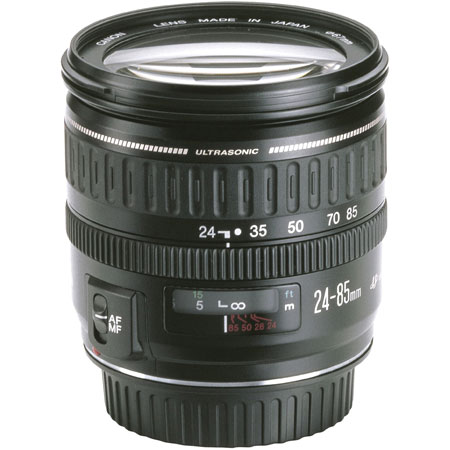


On to the lenses! First of all, the lens that I use most often is my Canon EF 24-85mm f/3.5-4.5 USM zoom lens. It is a lens that was given to me by a good friend of mine in Grahamstown (or someone that I consider to be a good friend, though he may think of me as more of a leach on his talent), Mr. Paul Mills. The lens itself is not in top notch condition, the reason he gave it to me being that it fell at some point, breaking the manual focus ring. It still works, but with difficulty, and I have managed to master it in my own way to make it work for me. It has replaced my original 28-80mm lens, and I have never really looked back.


One of my favourite lenses is my Canon EF 50mm 1.8 ii Prime lens which I bought while I was in Korea. I was a little silly when I got it, because I should have splurged the extra cash and bought it new, but instead I chose to get it second hand, and over time the lens itself has started to give me problems. But that does not stop it from being one of the most fun lenses that I own, and one that I use to give me a new perspective on life. It is wonderful in low-light situations and a lot of fun to play with, a good reminder that feet are the best zoom that a person can have.


My new baby (when it comes to lenses) is the birthday present that my parents got me this year, which is my Sigma 10-20mm f/4.0-5.6 Wide Angle which I am looking forward to having lots of adventures with! A wide angle has been one of my wishes for so long that it feels as though a world of possibilities has opened up before me, and I can't wait to take a nice long trip just so that I can test it out the way that it should be tested, on the open road.
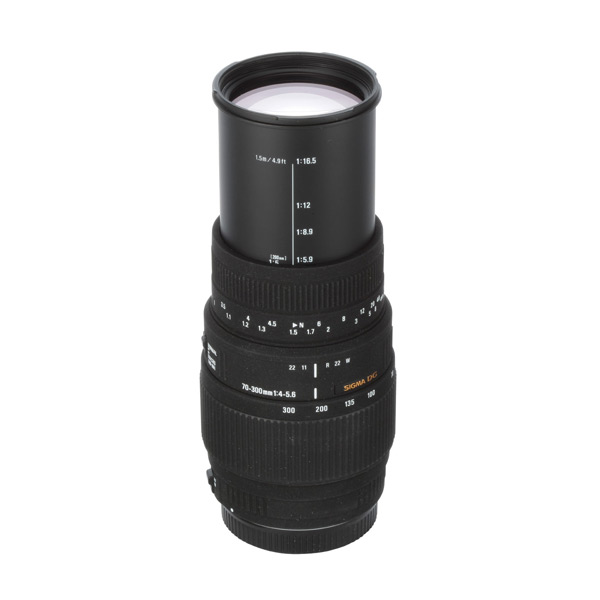


My fourth lens, and the one used least often these days, is my Sigma 70-300mm f/4-5.6 Telephoto lens... although technically I can't call it mine since it is still on indefinite loan from my father. This is the joy of having a dad who understands photography and the costs of starting out - lenses on loan. Though I do find this lens to be good for a bit of Macro photography, I don't get a chance to use it often considering that I take portraits for the most part. And though a telephoto can give you the advantage of being able to take photographs from a distance, giving your subject the space that can so often let them be more themselves, I find that I haven't had a chance to use it in my photo shoots... yet. I still carry it with me should the need arise, and I look forward to the day when it will come in handy to capture that perfect moment from a distance.


To add a little spice and a little fun to my lens collection, while I was in Korea, I bought a set of extension rings to add to my collection. Though I don't use them nearly as often as I used to, with it being so much easier to flick the switch to Macro on my telephoto lens than dismantling the rings and changing, taking off and putting lenses onto the rings, I still find them a lot of fun to play around with and I've written a few blogs about them. I still carry them in my bag because, as I found out at a wedding last year, they can definitely come in handy.


With the lenses out of the way, it is time to get down to my other gear, or at least the gear that I carry with me. First of all is the flash that I have on loan as well (have you noticed how I have amassed most of my gear through borrowing, loaning and just pure luck? Because going over this, I have!) It is a beautiful Canon Speedlite 580EX which is on loan from my boss at work, and which works particularly wonderfully together with my new studio lighting (another birthday gift that I am looking forward to practicing with). With a tilt range that is practically perfect, it is the ideal on and off camera flash, and is an item that I would love to own for myself one day. For the moment though, I am just happy to get to use it on occasion and keep it in my camera bag until Dianne needs it.


Speaking of my birthday present, part of it is my new Elinchrom EL-Skyport Speed Transmitter which will live in my camera bag from now on rather than in the studio itself. It is what ties the flash to the new lighting system, and ties the new lighting system together overall, and though I have only played around with it so far, it is what is going to bring my studio photography to the next level. I can just tell.


Next up is my Aputure Shutter Release Cable that I bought for myself to try and attempt some astral photography, which I have only gotten around to once since the purchase. But this little device has been used for self-portraits and random odd-jobs that I would never have expected, and is one of the cheaper, but more useful purchases that I have made.


Along with the pieces of equipment, there are one or two other bits and bobs that I store in my camera bag, and this includes 3x memory cards, a second camera battery, a charger (not going to be caught without with that again!), camera and lens covers and, finally, some business cards (which I am also now storing in my wallet and my handbag since being stuck one too many times without them and looking a real fool talking about being a photographer and not having a card to give out.


And that is it! That is the gear that I have on me at all times, and next time I may go into talking about the equipment in my studio, particularly once I have given the new lighting system a real try instead of the playing around that I did on Sunday.

Tuesday, February 21, 2012

Another Flash Tutorial

I do not own a flash. It is one of the items on my wishlist for this year and I do intend to get one sooner or later. For the moment though, when I need to use one, I need to borrow it. Thankfully, my boss is also a fan of photography, and has one on hand that she has lent to me before (for the last wedding that I had to shoot). With another wedding around the corner, I needed to borrow it again and needed to get used to using it again.

The flash in question is a very very nice one, but the exact specifications are not actually all that important for this blog. What is important to know is that the flash fits into the hotshoe of the camera and has the ability to tilt upwards by 90 degrees and 45 degrees to either side. It is something that I absolutely love about the flash and something that I am definitely going to try to find in whichever flash I end up buying.

Why is this so important then? First of all, having a flash that fits into your hotshoe is very useful when doing photo shoots outside of a studio. When you are in a studio, you can arrange the lighting in any way that you like through the use of umbrellas, reflectors and more powerful lights than a flash can provide. When you are out and shooting, however, you do not always have these available to you. The on-camera flash is too harsh for most situations and, since you cannot adjust where it points, it often ends up only illuminating what is in front of you and not providing sufficient ambient light. This can, of course, be made up for by adjusting the shutter speed and exposure, but when the images are being taken with a hand-held camera rather than a tripod, it can be difficult to perfect. This is why having a flash that fits onto your hotshoe can be useful. Of course, being able to use it off-camera (which this one can do) would also be useful, I imagine, but I have yet to experiment with that, and for the moment will only be talking about using it on a hotshoe. Having a stronger flash on your hotshoe, which can be adjusted in terms of brightness, can have diffusers attached to it and can tilt gives you a lot more flexibility in the images that you can take and make.

The tilt is the other big advantage to having a hotshoe flash. This flexibility is less important when using a flash off-camera, since you can point the flash in any direction that you choose. But, when the flash is attached to your camera, you cannot point the flash in a different direction to the one that the camera is facing unless it has a tilt function. And the tilt function makes a huge difference. By tilting the flash, you can bounce the light that the flash provides to illuminate your subject in the best possible way. I have taken some images to illustrate the point.


In the above image, the first two shots were taken with the flash, a shutter speed of 1/50, an aperture of f/8 and had an ISO of 400. The final image was taken without flash. It was taken with a shutter speed of 1/25, a fairly low one and good for handheld photography, the lowest aperture that my lens would allow for (f/4.5) and an ISO of 3200. All shots are directly from the camera and have not been edited except to put them together in this "collage".

The first image was taken with the flash pointing directly at the guitar. You will notice that the shadows in the centre are dark, the light in the centre is very stark compared to the shadows, the light reflecting off the string and the left side of the guitar is very bright, and you can see the shadows underneath the strings because of the angle that the photo was taken at. If you look to the upper right corner, you will also notice that it is completely in shadow.

In the second image, I had tilted the flash 45 degrees to the left. You will notice that the shadows in the centre are a lot more muted. There are still shadows, but they are less obtrusive and the light in the centre is less bright and less stark because of it. The strings are brighter, but not as reflective and there are no longer any shadows underneath them. The light itself is better distributed throughout the image and if you look at the upper right hand corner of this image, you will notice that it is white (as it should be).

In the third image, you will notice that the photo is not well lit in general, even at a fairly low aperture and shutter speed. However, there are noticable details. The colouring is a lot yellower in the image and the shadows are also distinct, especially when compared to the second image. There are no stark contrasts, however, and everything is fairly muted. 

The third image clearly needs more or better lighting, which the flash provided in both of the photos to the left of it. The second image might be a little too well lit. Shadows do provide interest to images, and there are hardly any in this image. Adding a little contrast would take it a long way. The first image is better in terms of the interest that the shadows provide, but may be a bit too stark and is far from ideal for most situations. I would likely end up brightening it to some extent in post-editing.

The same can be seen in the next images.


None of these are perfect photos, none of them were meant to be perfect. But they do show the usefulness of tilting your flash and bouncing light on a subject. It can have great results if you know how to use it, and it is something that I am still learning how to use. But I can already see a big difference in the photographs that have been taken while I used it. It is something that I look forward to learning more about!

What area of photography do you want to learn more about?

Monday, October 3, 2011

My First Wedding Shoot (What To Do and What Not To Do)

"In the art of marriage... it is not only marrying the right partner. It is being the right partner."
So, as many of you may know by now, I spent last week Friday doing the photography for the wedding of two friends. It was the first wedding shoot that I'd done, and there were bound to be mistakes. In fact, there was one very big one, but I will get back to that later. Let me tell you first how I prepared for the day.

Preparing is one of the most important parts of the big day. Go there unprepared and your photos will show it.

First things first, I wrote down a list of shots that I wanted to take. I knew the bride and groom already and knew some things that they might want to do and some things that they might not want to. They were not available at the time to ask, so I wrote up my own list and prepared myself to ask them for specifics when they came back from their honeymoon (which they took before the wedding).

One of the shots that I had on my list. Mike throwing Vicky into the river.

Once I had the preliminary list, I started searching through the photography blogs that I follow for more ideas and advice. I added more photographs to the list that was steadily getting  longer and longer, and decided to visit the venue for the wedding a week early to get a feel for the place.

The main stage for the ceremony. It was a good idea for me to go there first otherwise I wouldn't have known that the area was badly lit with nothing to bounce light off of. I knew that I would need to bring a lens which could get wide open and that I would be dealing with higher ISO images.
Seeing the venue was a great plan, since I found out that I would need equipment that I didn't have and wasn't familiar with using, namely a flash. Luckily, I managed to find one, and that part of the day was saved. I quickly learned to use it and learned to love it, and you can expect a post on that at some point within the next few weeks.

One of the shots that I took with the super-awesome amazing flash that I borrowed for the evening, showing how well the light bounced in the reception venue.

On the day itself, before leaving the house, I made a checklist of all the photography gear that I was going to need - lenses, tripod, flash, batteries, charger, bag, etc. and made sure that they were the first things packed into the car since I didn't want to forget anything. We then made the half hour trip to Port Alfred and relaxed for an hour or two in our accommodation before meeting the bride and groom and getting the day started.

Leaving your gear behind would be like an artist leaving his/her brushes at home. Thankfully, this was one thing that I made sure to include.
So that was the prep that I did. And at the time, it felt like the right kind of prep to be doing. I arrived in Port Alfred feeling nervous, but pretty much ready for anything. I had met with the bride and groom and had removed some of the photographs from my list simply due to lack of numbers, since there was only one bridesmaid and one groomsman, which took away a lot of the photographs that I had planned for the bridal party. I had printed out the list of photographs that I had in mind and kept it in the camera bag that I was going to be using. So where did I go wrong then?

First of all, I would recommend insisting that the bride and groom make their own list of photographs in addition to your own. They will want to have specific photos taken, as will their families, and if you do not know what those are, you will be thrown off guard when they ask for them. In this case particularly, the bride and groom told me that they had no specific requests and that they just wanted "everything". That is great and all, but your everything may not be their idea of everything and can lead to slight chaos.

Even though the bride and groom told me that they wanted "everything" they did have some great ideas for "romantic" shots that ended up working out really well and being some of my favourites for the shoot. This is another reason why you should ask your bride and groom what kind of shots they want. I guarantee that not all brides would be impressed with their hubby trying to hit them over the head with an oar. This particular couple were completely into it, which meant that we could have a lot of fun playing around instead of only having serious shots.

Next, I had everything planned down to a tee, and that is never a good idea. What happens then is that when someone comes along suggesting something different, you get thrown off. I had tons of ideas for great shots, but I suddenly found myself forgetting all of them when the bridesmaid refused to pose with the bride's brother (family drama) and when the groom's family (aside from his parents) got stranded in Cape Town and were not able to make it. It is great to be prepared, but try to leave some room for error. Do not freak out when things don't go exactly as planned.

I had planned the family shots very carefully, wanting to bring in first parents, then siblings, then extended family, etc. When Mike's family missed their flight in Cape Town it messed with the order of things and I was left utterly stumped while Mike and Vicky took over and told who to come forward when. This is not ideal. As the photographer, you should be in charge. But since this was a first for me, I think I was forgiven.

Make sure that you have your tripod everywhere, and that you know it inside out. I had hardly used my tripod before the wedding, and while I used it for the family shots, which was great, I found that the dial used for turning the camera on its side was stuck, and not wanting to fiddle around with it, I elected to leave it instead and only took landscape oriented pictures of the family, which I later regretted. I also regretted not having the camera with me at the ceremony, as the area was dark and there was nothing to bounce the flash off of, which meant that I needed to use low shutter speeds with wide apertures and try to hold the camera as still as possible. I managed to get some good shots by leaning on a tree, and I am still not sure that I would have found a place for my tripod due to the angle that the venue was placed at (I'm not sure I would have found somewhere steady enough), but I know that I would have appreciated it.

Knowing your gear well is a definite must! I was kind of lucky with this photo as the little girl was the only one who didn't jump and was therefore the only one in focus, since I forgot to set the shutter speed correctly prior to the jump.

Don't loiter. I very nearly missed the bride and groom leaving on their quick boat trip to the reception simply because I stood around chatting when I should have been off and away as soon as they had left. I missed them climbing into the boat, but thankfully managed to catch them before they rowed off and managed to get a good number of shots in.

Loitering around during the wedding means missing the important shots of the bride and groom when they are alone after the deed has been done. You can get photos of the guests before and at the reception, but the time after the ceremony is time best spent following the bride and groom and catching their glances, their excitement and their special moment.

And now for the big one. The biggest mistake that I made that night was not being sure how many photographs my camera's battery could handle. It turns out, that number is around 715. I didn't know this and wasted a lot of shots on the bride getting ready (another mistake, unless you have a spare battery lying around and a lot of time to do processing of the photos later) which I could have saved for things like the cake being cut and the couple's first dance. I had also left my charger in my bag in the accommodation (yet another mistake) which meant that I really was just completely out of luck. I missed a  large part of the ceremony, but thankfully got the necessary photographs of the family and the friends, the speeches and some of the food, the romantic pics, the ceremony and the preparation, which meant that the bride and groom were not too upset, but that didn't stop me from being furious with myself and vowing that the next item I buy will be a second battery.

Because I left my camera at home, this was the last photo I was able to take, which was thankfully the last of the speeches. However, it also meant limiting my photographs to try and get this much life out of the camera and there were special moment missed in between, such a Mike's father tearing up during his speech.

So, what did I do right? Preparing, making lists of photographs, making checklists of items to bring (and bringing them), getting to know any new equipment that I may have needed to use, checking out the venue before hand, checking with the bride and groom what the bridal party was going to be like and being there nice and early to get all of the necessary shots.

Showing a little courtesy is always the right thing to do. Being married doesn't mean that courting should go out of the window after all ;)

What did I do wrong? I over-prepared, didn't know my own equipment well enough, let last minute changes stress me, loitered (a little), didn't insist on the bride and groom's input on my photography list and didn't bring a second Canon battery or my charger along.

Abandoning your bride on a narrow pier in high heels is the wrong thing to do on your wedding day, much like the things that I did wrong!

At least now I know for the next time, and will learn from my mistakes. The next wedding that I do will hopefully go more according to plan, and less according to plan at the same time, since next time I hopefully won't plan as much and will be calmer now that I have some experience in my belt. No more stressing and more relaxing and having fun! Is there any advice that you would add?